What is a commercial HVAC technician?
A commercial HVAC technician is trained to work on the larger, more complex systems that condition businesses, rooftop packaged units, splits, VRF, and refrigeration, often on three-phase power with building controls. It is different work from residential: bigger equipment, higher stakes on downtime, and code and safety requirements specific to commercial buildings. Our techs are certified for both.
What do commercial HVAC technicians do?
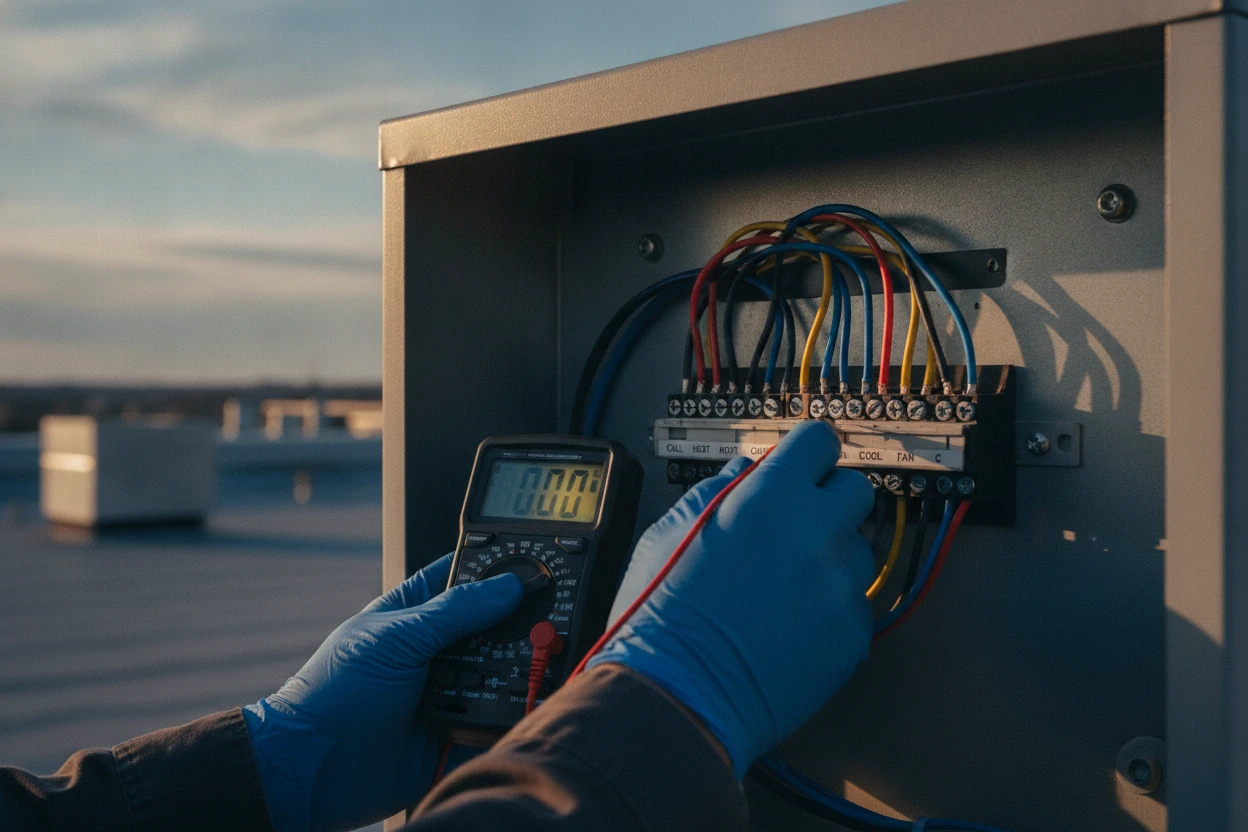
They diagnose and repair rooftop and split systems, refrigeration, and controls; test electrical, refrigerant, and airflow; service economizers and dampers; and keep buildings within temperature and code. On the repair side that means getting a failed unit back online fast, and on the maintenance side, preventing the failure in the first place.
What is the difference between commercial HVAC and regular HVAC?
Commercial systems are larger and more complex, frequently rooftop packaged units on three-phase power, sized in tons rather than a home’s few, with building automation, economizers, and zoning. Access, code, and the cost of downtime all differ. That is why commercial work needs technicians and parts geared for it, not just a scaled-up residential visit.
How much does commercial HVAC repair cost?
It varies with the system, the failure, and the building, far more than a residential repair, so we diagnose first and give you a written quote before any work. A minor control or capacitor fix is modest; a compressor or rooftop-unit repair is a larger job. We prioritize getting you running and are transparent on the number up front.
What are common commercial HVAC problems?
The usual culprits are electrical failures (capacitors, contactors, motors), low refrigerant from leaks, dirty coils and clogged filters, economizer and damper faults, thermostat and control issues, drainage problems, and worn compressors. On rooftop units, weather exposure adds wear. Regular maintenance catches most of these before they shut a business down.
How often should a commercial HVAC system be serviced?
At least twice a year is the ASHRAE-aligned baseline, and high-use buildings, restaurants, or systems with heavy filtration often need quarterly service. A preventive-maintenance contract keeps rooftop units and refrigeration ahead of failures and is far cheaper than the emergency call and lost business a breakdown causes.
Which type of HVAC system is most commonly used in commercial buildings?
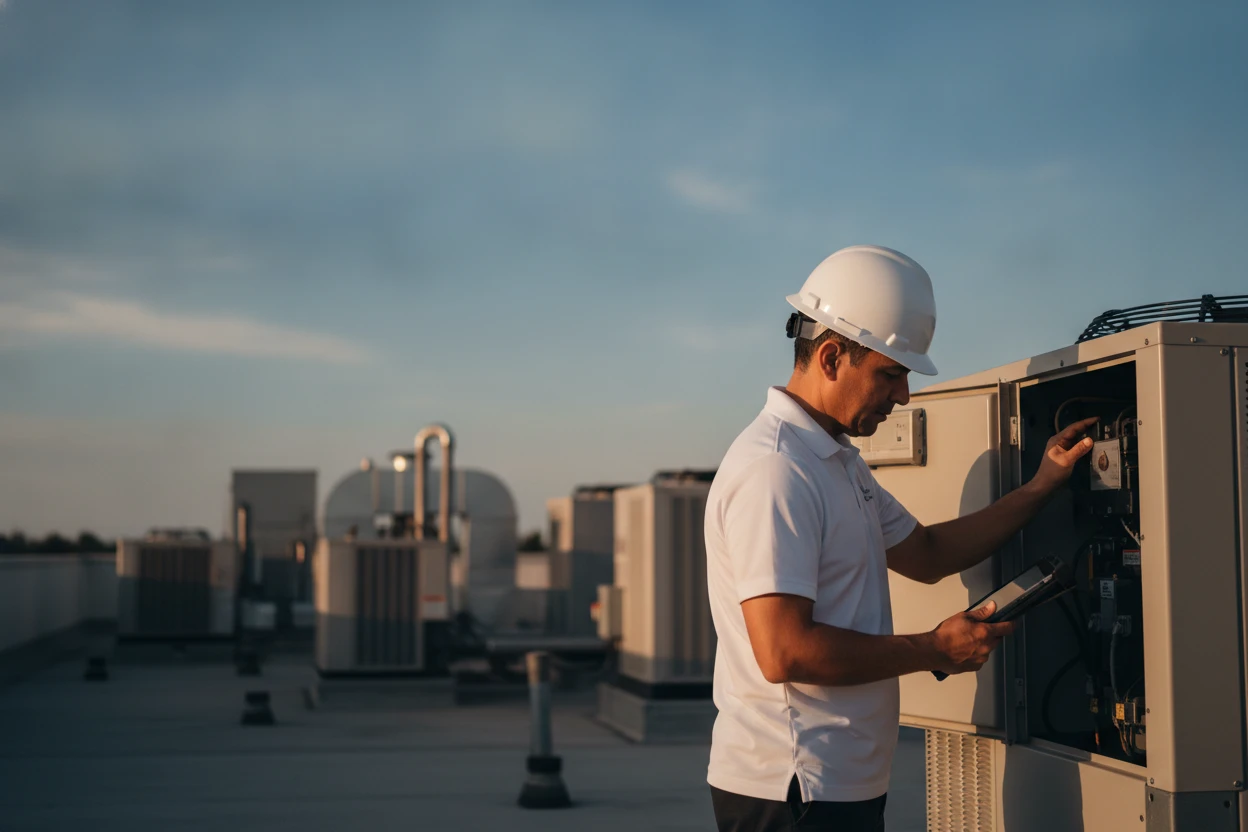
The rooftop packaged unit, or RTU, is the most common in small to mid-size commercial buildings, because it puts the whole system on the roof and frees interior space. Larger facilities use split systems, VRF, or chillers. We service all of them, and the RTU is what we’re on the roof for most often.
Why is commercial HVAC cleaning and service so expensive?
Commercial equipment is larger, often roof-mounted with harder access, runs on three-phase power, and uses more refrigerant and bigger parts, all of which take more time, specialized tools, and certified labor. The upside is that proper service prevents the far bigger cost of unplanned downtime, which is why a maintenance contract usually pays for itself.
What are the signs a commercial HVAC system needs repair?
Watch for uneven temperatures across the building, weak airflow, rising energy bills, short-cycling, strange noises or smells, water or refrigerant leaks, and tenant or staff complaints. Any of these on a rooftop or split system is worth a prompt diagnostic before it becomes a full outage during business hours.
How do I know when my commercial HVAC needs replacing?
Consider replacement when the system is past 15 to 20 years, needs frequent or costly repairs, can’t hold temperature, or runs an old refrigerant like R-22 that is expensive to service. We run the numbers with you, repair versus replace, factoring efficiency gains and downtime risk, so it’s a business decision, not a guess.
Is there a tax credit for commercial HVAC in 2026?
Commercial buildings may qualify for the 179D energy-efficient commercial buildings deduction for qualifying efficiency upgrades, which is different from the residential 25C credit that expired at the end of 2025. Eligibility and amounts depend on the project and your tax situation, so confirm with your tax professional. We can provide the equipment efficiency documentation you’ll need.
How often should commercial HVAC be replaced?
A well-maintained commercial system typically lasts 15 to 20 years, though heavy-use rooftop units can wear faster and refrigeration varies by type. Rather than replace on age alone, we track repair frequency and efficiency and flag when a unit has reached the point where replacement is the better long-term spend.
Do you offer emergency commercial HVAC repair?
Yes. We answer fast and prioritize commercial no-cooling and no-heat calls, because for a business every hour down is lost revenue and comfort. We carry common rooftop-unit and refrigeration parts to restore operation fast, and give you a written quote before any billable work.
Do you work with property managers and multi-site businesses?
Yes. We work with property managers, facility teams, and multi-location businesses across the Sacramento area, with maintenance contracts, consistent reporting, and priority dispatch. One point of contact for every rooftop unit and split system across your buildings.
 Review on Google · April 2026