How much does HVAC repair cost in Sacramento?
Our diagnostic is a flat $89, waived when you book the repair with us, so you never pay for a diagnosis and then a surprise on top. Most repairs land between $150 and $600 on a written flat-rate quote you approve before any work begins, with no overtime charge on evenings or weekends.
Do you offer same-day and emergency HVAC repair?
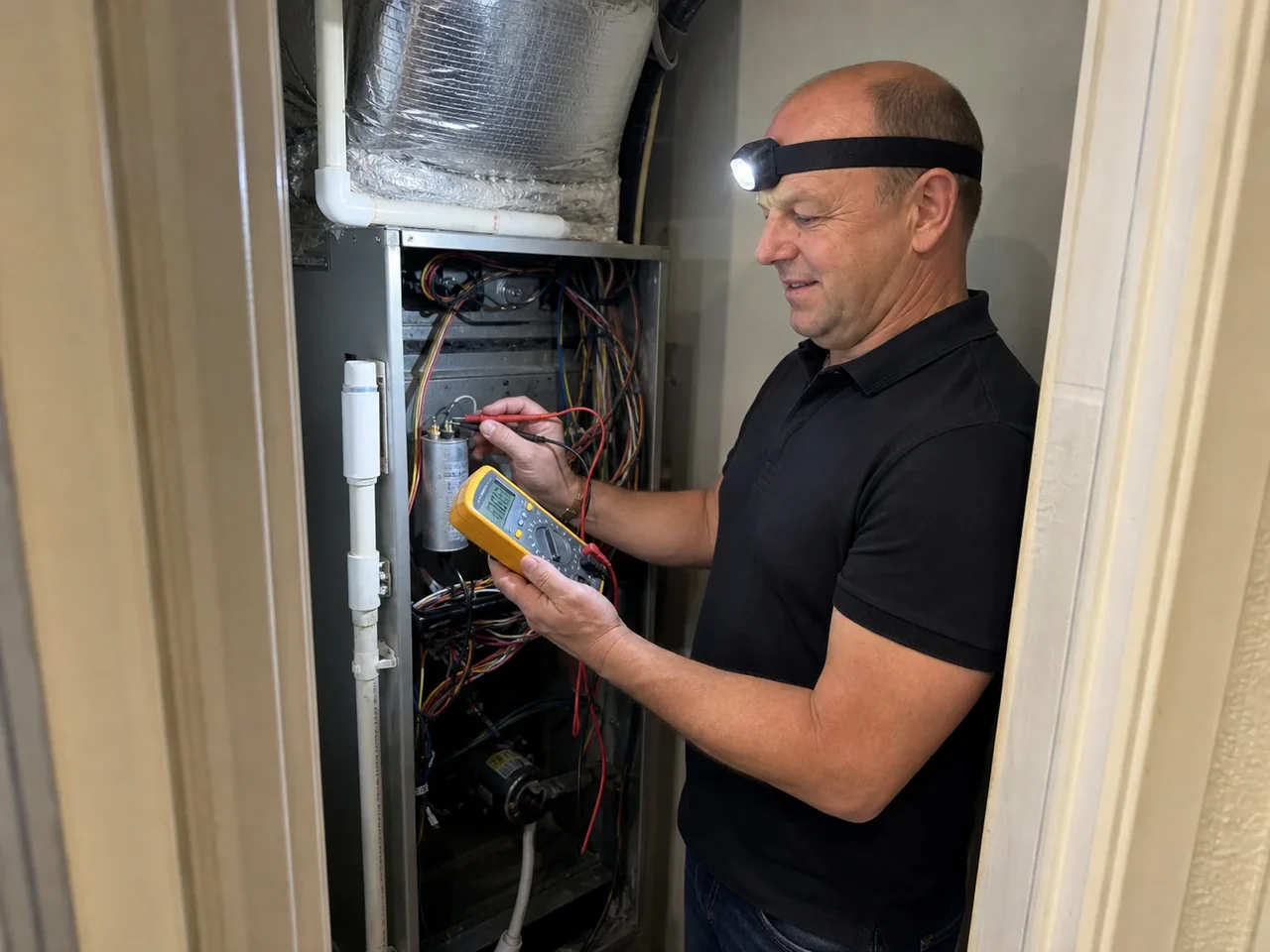
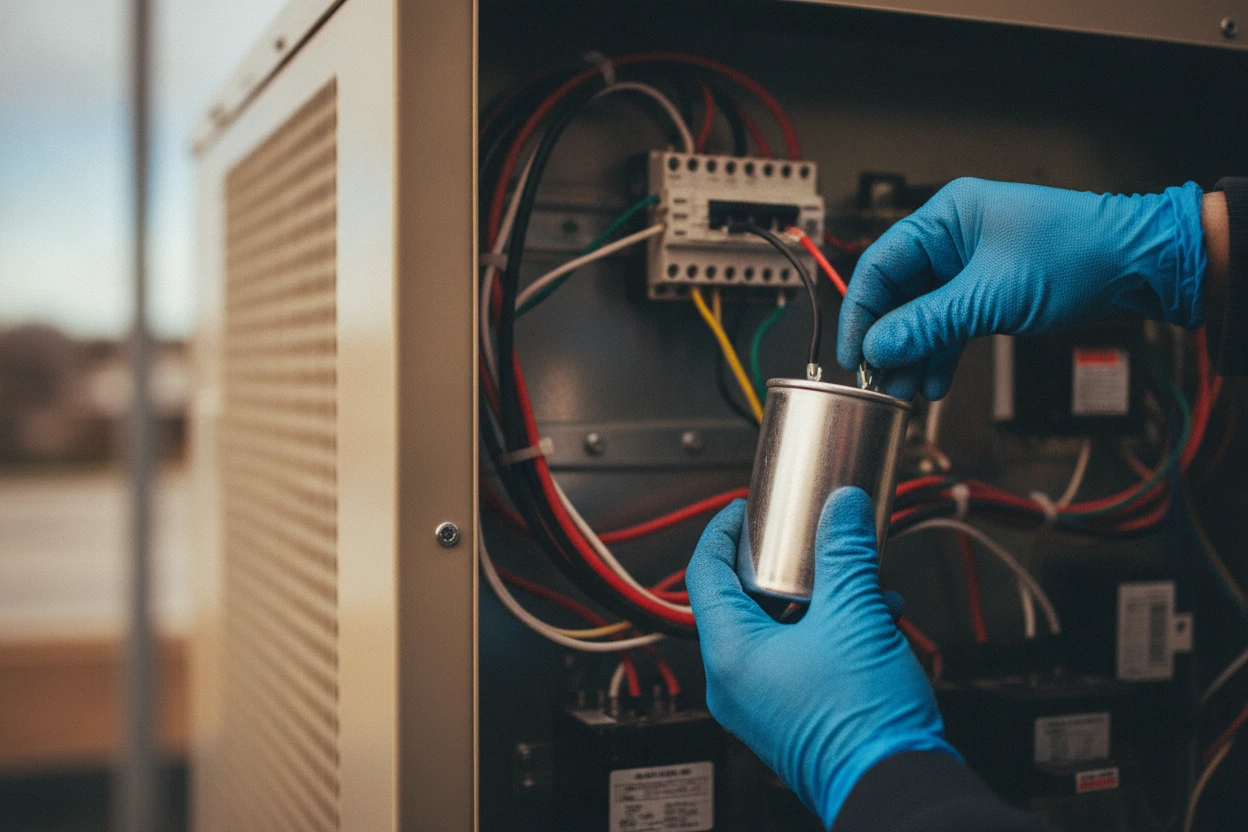
Yes. We answer fast and offer same-day appointments, including weekends by appointment. Most common failures like capacitors, contactors, igniters, and motors are stocked on the truck and fixed in a single visit.
What are the most common HVAC repairs?
On the cooling side, failed capacitors and contactors, low refrigerant from a leak, and dirty coils top the list. On the heating side, dirty filters causing short-cycling, failed igniters and flame sensors, and faulty thermostats are most common. A dirty filter is behind a surprising share of both no-heat and no-cool calls.
Is it worth repairing an old HVAC system?
It depends on age and repair cost. A useful rule of thumb is the $5,000 rule: multiply the system’s age by the repair cost, and if it climbs past about $5,000, lean toward replacement. Also replace when a repair tops half the price of a new system, or when a gas furnace or boiler has a cracked heat exchanger, which is an automatic replace on safety grounds. We give you the honest call in person.
What should I do before the technician arrives?
Check the thermostat is set correctly and has fresh batteries, replace a visibly dirty filter, and confirm the breaker and the unit’s own on/off switch are on. These rule out the simplest causes. If you smell gas or a carbon monoxide alarm sounds, leave the house and call us from fresh air, and do not troubleshoot a combustion system yourself.
Do you repair all HVAC brands?
Yes. Our licensed, EPA-certified technicians train on every major brand of air conditioner, furnace, heat pump, and boiler, so we can diagnose and repair whatever you have. We carry common universal and brand parts on the truck to fix most failures in one visit.
Is my HVAC repair under warranty?
Many systems carry a manufacturer parts warranty for several years, though it usually requires proof of annual maintenance to stay valid, and labor is typically separate. We check your equipment’s age and warranty status during the diagnostic and factor any coverage into your written quote. Our own repairs carry a 90-day warranty.
Why is my HVAC system short-cycling?
Short-cycling, turning on and off in quick bursts, is most often a dirty filter restricting airflow, a system that is oversized for the space, low refrigerant, or a failing control or sensor. Start by replacing the filter. If it continues, our diagnostic pinpoints the cause so you are not throwing parts at it.
How long does an HVAC repair take?
Most common repairs are finished in a single visit, often within an hour or two, because we stock the usual failed parts on the truck. Larger jobs like a compressor, heat exchanger, or blower motor can take longer or need an ordered part, and we tell you the timeline up front with your written quote.
What are the signs I need HVAC repair?
Common signs are weak or no airflow, air that is not hot or cold enough, short-cycling, spikes in your energy bill, grinding or banging noises, odd smells, and moisture or leaks around the unit. Any of these on an aging system is worth a diagnostic before it becomes a breakdown.
What is the most expensive HVAC repair?
The compressor on the cooling side and the heat exchanger on the heating side are the priciest repairs, and because both sit near the heart of the system, a failure often tips toward replacing the unit instead. The blower motor and control board are the next costliest. We give you the repair-or-replace math before you commit.
How much is emergency HVAC repair?
We charge a flat $89 diagnostic and quote the repair up front, with no overtime surcharge on evening or weekend appointments, so an emergency call is not automatically pricier than a scheduled one. Most repairs still land in the $150 to $600 range on a written quote you approve first.
Will insurance cover HVAC repair?
Standard homeowners insurance usually does not cover normal wear, age, or breakdowns, but it may cover HVAC damage from a covered event like a fire, lightning strike, or falling tree. A separate home warranty or the manufacturer warranty is more likely to help with a failure. Check your specific policy, and we can document the cause for a claim.
Why is HVAC repair so expensive?
Cost reflects specialized parts, refrigerant that is regulated and pricier since the R-410A phase-out, licensed and trained labor, and diagnostic equipment. A flat-rate quote you approve up front, with the $89 diagnostic waived on the repair, keeps it transparent so the invoice never surprises you.
Who do I call if my heat, AC, or thermostat isn’t working?
An HVAC contractor is who you call, and we answer fast. Before you do, check the thermostat setting and batteries, the breaker, and the filter, since those solve a surprising number of no-heat and no-cool calls on their own.
Are you supposed to tip an HVAC repairman?
Tipping is not expected in the HVAC trade. Technicians are paid for the job, and a good review or a referral means more to them than a tip. If a tech went well out of their way and you want to, a small thank-you is appreciated but never required.
Should I get a second opinion on HVAC repair?
Absolutely, especially before a big-ticket repair or a full replacement, and an honest company welcomes it. Our diagnostic gives you a written, plain-language explanation you can compare, because we would rather earn your trust than pressure a decision.
What is the average lifespan of an HVAC system?
Most HVAC systems last about 15 to 20 years, with heat pumps on the shorter end near 10 to 15 because they run year-round. Annual maintenance is the biggest factor in reaching the top of that range and keeping the warranty valid.
What HVAC systems are best for allergies?
A system paired with a MERV 13 filter captures pollen, dust, mold spores, and pet dander, and sealed ducts plus UV purification and humidity control cut allergens further. A variable-speed system that runs longer at low speed also filters the air more consistently. The filtration and duct setup matter more than the brand.
 Review on Google · May 2026