What is the difference between commercial AC and normal AC?
Commercial AC is larger and built for a building’s load, most often a rooftop packaged unit on three-phase power sized in multiple tons, with economizers, zoning, and building controls. Residential AC is a smaller split system for a home. Commercial equipment runs harder, is engineered around uptime and code, and needs technicians and parts geared for it, not just a bigger version of a home unit.
How much does a commercial AC unit cost?
It depends heavily on tonnage, whether it’s a rooftop packaged or split system, and efficiency, so we quote per project after a load calculation. A small rooftop unit is far less than a large multi-unit system, and rigging, curbs, and electrical add to it. We give you a written proposal rather than a blanket number.
How much does it cost to install a commercial AC unit?
Installation cost varies with the unit size, roof access and rigging, curb and duct connections, and electrical, which is why it’s scoped and quoted per building. A straightforward rooftop change-out is more predictable than a new system with new ducting. We assess the site and put the full price in writing before any work.
How often should commercial AC be serviced?
At least twice a year is the ASHRAE-aligned baseline, before and after cooling season, and high-use buildings often need quarterly. Rooftop units are exposed to weather and work hard through Sacramento’s 100-degree summers, so regular service keeps them efficient and heads off the peak-season breakdown. A maintenance contract is the cheapest protection.
What is the life expectancy of a commercial AC unit?
A well-maintained commercial AC unit typically lasts 15 to 20 years, with heavy-use rooftop units on the shorter end. Maintenance is the biggest factor, dirty coils, low charge, and worn parts left unaddressed shorten life significantly. We track condition and flag when replacement beats another repair.
Which type of AC is best for commercial use?
For most small to mid-size buildings, a rooftop packaged unit is the practical best, cost-effective, space-saving, and easy to service. VRF suits multi-tenant or variable-load buildings that need precise zoning and high efficiency, and chillers fit large facilities. The best choice depends on your building, which a load calculation confirms.
How much does a commercial HVAC unit cost for a 1,500 sq ft space?
A roughly 1,500 square foot commercial space often needs about 3 to 4 tons of cooling depending on use, so it’s on the lower end of commercial pricing, but the exact number depends on the load, ceiling height, occupancy, and equipment inside. We size it with a load calculation and give you a firm written quote.
How much is a 5 ton commercial HVAC unit?
A 5-ton rooftop unit is one of the most common commercial sizes, and its installed cost depends on efficiency, the existing curb and connections, and rigging. Rather than quote a moving equipment-only figure, we price the complete installed job in writing after seeing the roof and connections.
Is there a tax credit for commercial AC in 2026?
Commercial buildings may qualify for the 179D energy-efficient commercial buildings deduction on qualifying efficiency upgrades, which is separate from the residential 25C credit that expired at the end of 2025. Eligibility and amounts depend on the project and your tax situation, so confirm with your tax professional. We provide the equipment efficiency documentation you’ll need.
What is the best commercial AC brand?
The major commercial brands, Trane, Carrier, Daikin, Lennox, and York among them, are all strong when properly sized and installed. Real-world performance depends more on correct sizing, install quality, and maintenance than the badge. We’re brand-independent and recommend the unit that fits your building and budget.
Which commercial AC brand lasts the longest?
Longevity tracks with maintenance and install quality more than brand, the top commercial names all reach 15 to 20 years when cared for. A well-maintained mid-tier unit routinely outlasts a premium one that was oversized or neglected. We help you choose and then keep it running with scheduled service.
What are common commercial AC problems?
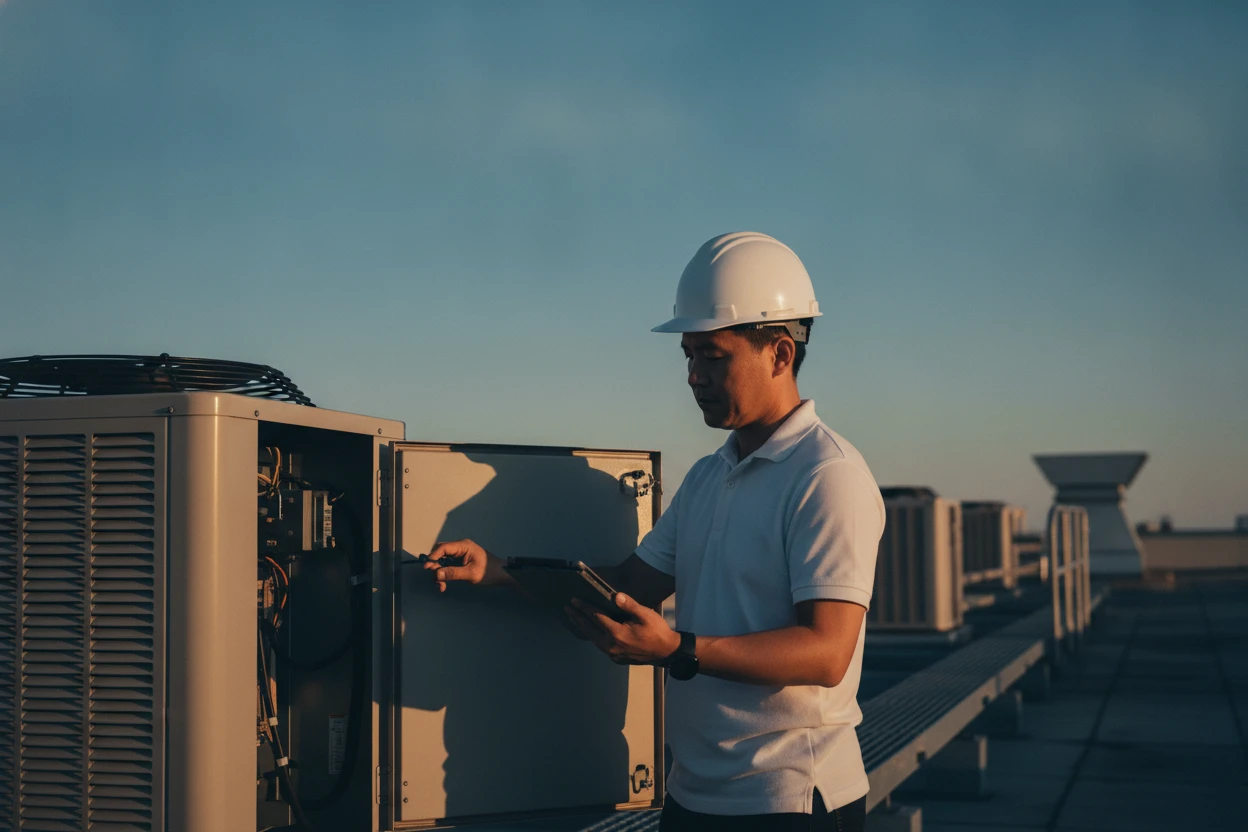
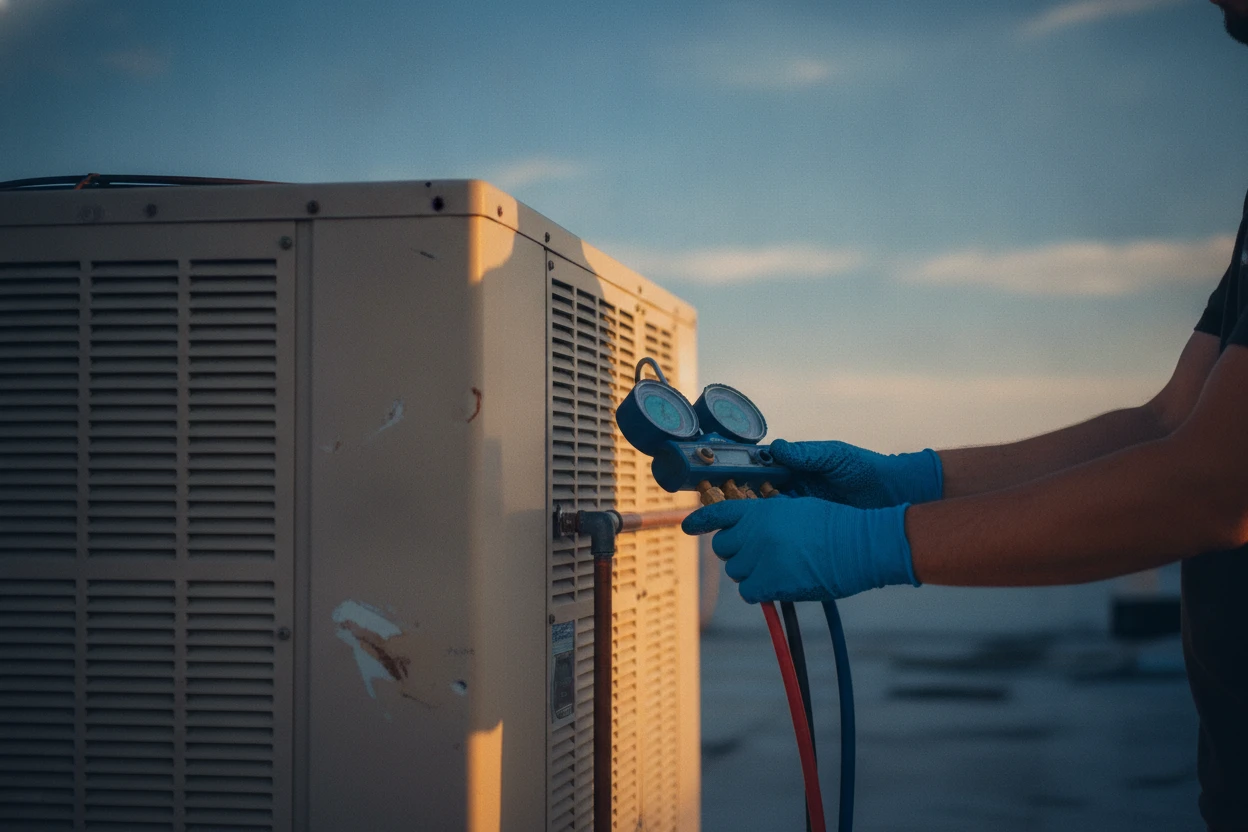
The usual issues are dirty condenser and evaporator coils, low refrigerant from leaks, failed capacitors and contactors, worn fan and compressor motors, economizer and damper faults, and clogged filters, plus weather wear on rooftop units. Most begin as weak cooling or higher bills, your cue to call before it fails on the hottest day.
Do you offer emergency commercial AC repair?
Yes. We answer fast and prioritize commercial no-cooling calls, because a hot building means lost business and uncomfortable staff and customers. We carry common rooftop-unit parts to restore cooling fast and give you a written quote before billable work.
 Review on Google · April 2026