How often should a commercial HVAC system be serviced?
At least twice a year is the ASHRAE-aligned baseline, before cooling season and before heating season. High-use buildings, restaurants, medical facilities, and systems with heavy filtration often need quarterly service. We set the cadence to your building type and usage rather than a one-size schedule.
What is included in commercial HVAC maintenance?
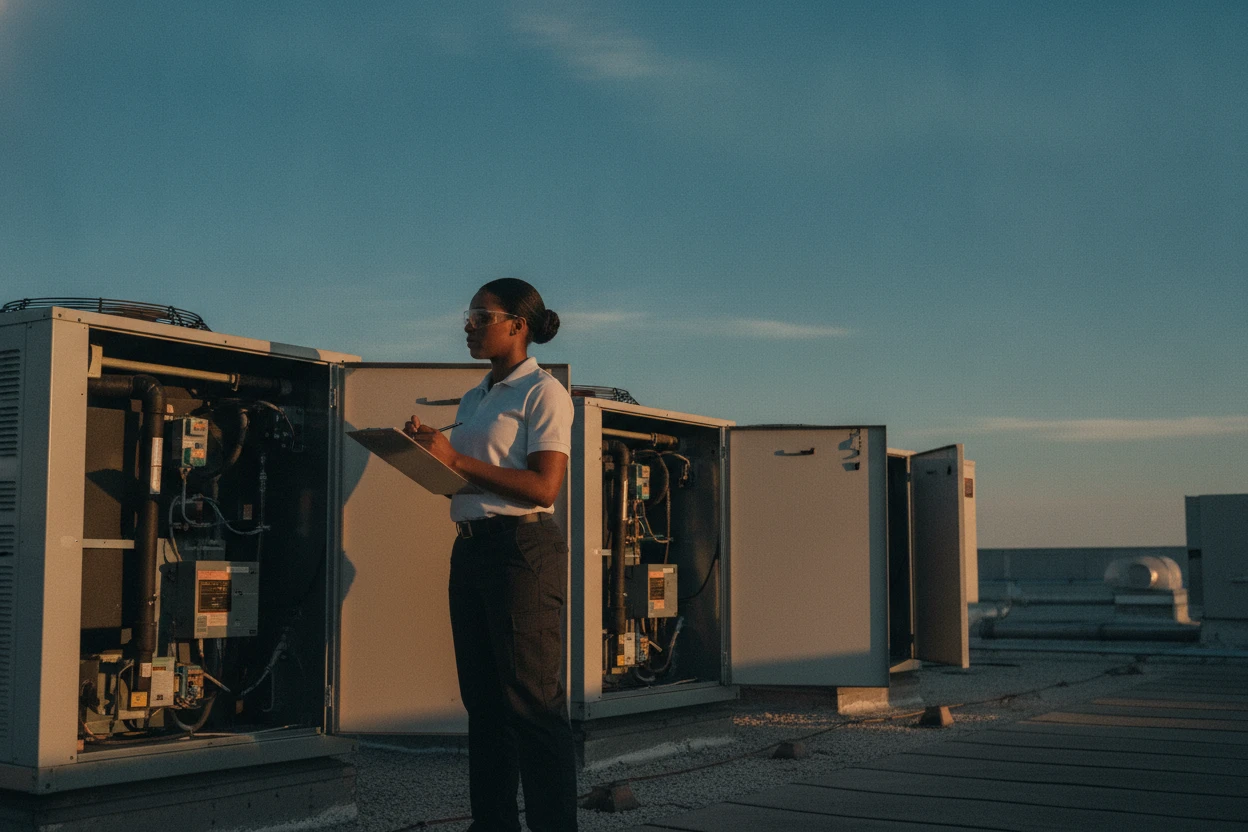
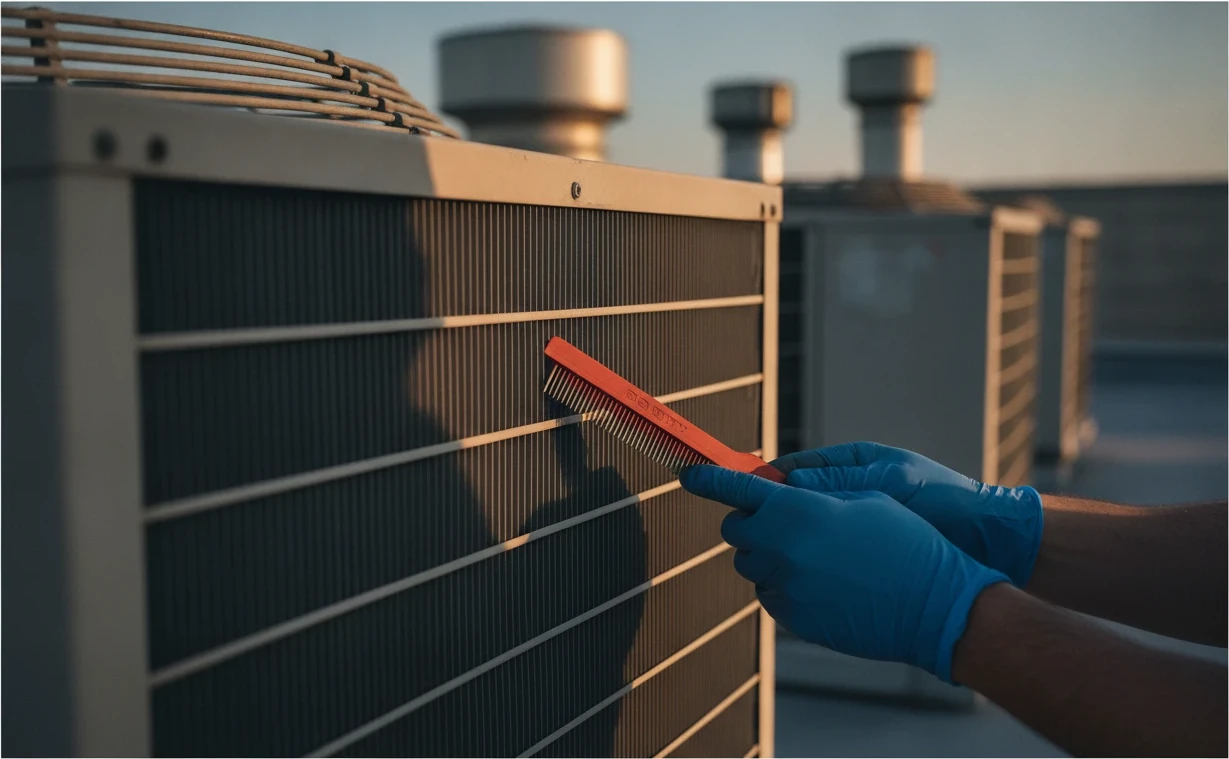
A commercial maintenance visit cleans coils and changes or checks filters; tests refrigerant charge, electrical connections, capacitors, and motors; inspects belts, bearings, economizers, and dampers; clears condensate drains; checks controls and safety devices; and, on gas equipment, inspects the heat exchanger and venting. You get a written report of findings and any recommended repairs.
What is considered commercial maintenance?
Commercial maintenance is scheduled, preventive service on the larger systems that condition businesses, rooftop units, splits, VRF, boilers, and refrigeration, usually under a service contract with set visits. It differs from a one-off repair: the goal is to keep equipment running, efficient, and within code, and to catch problems before they cause downtime.
Why is commercial HVAC cleaning and service so expensive?
Commercial equipment is larger and often roof-mounted with harder access, runs on three-phase power, and uses bigger parts and more refrigerant, so each visit takes more time, specialized tools, and certified labor. The trade-off is strongly in your favor: planned maintenance costs a fraction of the unplanned downtime, emergency rates, and premature replacement it prevents.
Do you really need annual maintenance for commercial systems?
Yes, and most commercial systems need more than annual. Regular service keeps efficiency up, extends equipment life, maintains warranty coverage, keeps the building within code and comfortable, and prevents the failures that shut a business down. For most buildings twice a year is the minimum, with heavy-use sites needing quarterly.
How much does commercial HVAC maintenance cost?
It depends on the number and type of units, building size, and visit frequency, so we price a plan to your specific building rather than a flat number, and give it to you in writing. Per-unit contract pricing is predictable and budget-friendly, and it is far less than reactive emergency service across a year.
How much does a commercial HVAC maintenance contract cost?
Contract pricing is based on how many rooftop units and systems you have, their size, and how many visits per year, so we quote it per building. A contract typically bundles the seasonal visits, priority dispatch, and a repair discount, which makes the annual cost predictable and lower than paying visit by visit.
What does a commercial HVAC service technician do?
On a maintenance visit the technician cleans, inspects, tests, and adjusts every part of the system, coils, filters, electrical, refrigerant, belts, controls, drainage, and safety devices, then documents the condition and flags anything that needs repair. The aim is to keep your equipment efficient and prevent the breakdown before it happens.
What happens if you don’t service a commercial HVAC system?
Efficiency drops and energy bills climb, small issues grow into failures that take the system down during business hours, safety problems on gas equipment can go unnoticed, and the equipment wears out years early. Skipped maintenance can also void the manufacturer warranty. For a business, the downtime alone usually dwarfs the cost of the service.
What are the signs a commercial HVAC system needs cleaning or service?
Uneven temperatures, weak airflow, rising energy bills, musty or stale air, dust from the registers, short-cycling, and tenant complaints all point to a system that’s overdue. On rooftop units, visible debris and clogged filters are common. A maintenance visit addresses these before they become an outage.
Is commercial HVAC duct cleaning really necessary?
Only when warranted. Like the EPA’s residential guidance, commercial duct cleaning makes sense when there’s visible mold, pest activity, or heavy debris, not as a routine line item. More often, sealing leaks, keeping filters current, and cleaning the coils does more for air quality and efficiency. We advise honestly rather than upselling.
What is the average life expectancy of a commercial HVAC system?
A well-maintained commercial system typically lasts 15 to 20 years. Heavy-use rooftop units can wear faster and refrigeration varies by type. Consistent maintenance is the single biggest factor in reaching the top of that range and in avoiding the mid-life failures that force an unplanned replacement.
How much does commercial HVAC maintenance cost per year?
Annual cost depends on the number of units, building size, and how many visits, so an accurate figure comes from a quick site assessment, delivered in writing. Because a contract bundles the visits and adds priority service and repair discounts, the yearly number is predictable and lower than reactive service, and far lower than the cost of downtime.
How often should commercial HVAC ducts be cleaned?
There’s no fixed schedule, cleaning is driven by condition, not the calendar, per EPA-style guidance. The trigger is visible mold, pests, or heavy debris. Keeping good filters in place and sealing the ductwork reduces how much ever accumulates, which is usually a better investment than routine cleaning.
 Review on Google · April 2026