Do UV air purifiers actually work?
Yes, for what they are designed to do. UV light installed in the HVAC system inactivates mold, bacteria, and viruses on the coil and in the moving airstream, which keeps the coil clean and reduces musty odors and biological growth. It does not capture dust or allergens, so it works best paired with a good MERV filter, which handles particles.
How does UV light purify air?
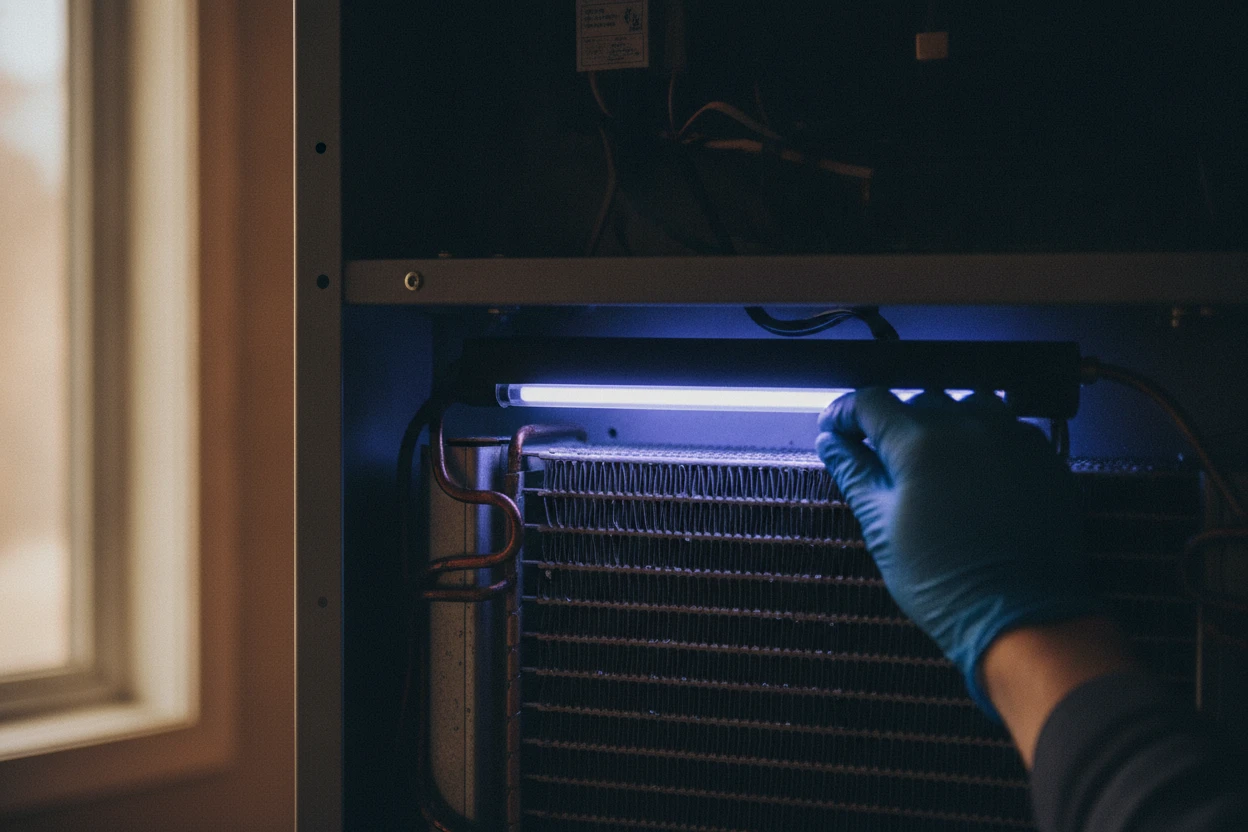
UV-C light damages the DNA of microorganisms so they cannot reproduce or survive. Installed at the evaporator coil or in the return duct, it continuously treats the air passing through and keeps the always-damp coil, a prime spot for mold, clean. It targets living contaminants, not dust or smoke particles.
Is it worth putting UV light in HVAC?
For many homes, yes, especially if you deal with musty odors, a history of coil mold, allergies, or humidity. It keeps the system cleaner, can improve airflow by preventing coil buildup, and adds a layer of biological control. It is one part of a good indoor-air setup, not a substitute for filtration or ventilation.
Can UV light kill mold in HVAC?
Yes. Coil-mounted UV is very effective at controlling mold on the evaporator coil and drain pan, which is where HVAC mold most often grows because it stays wet. Continuous exposure prevents regrowth. For mold already spread through the home, UV in the HVAC is part of the fix, not the whole solution.
Are UV air purifiers safe?
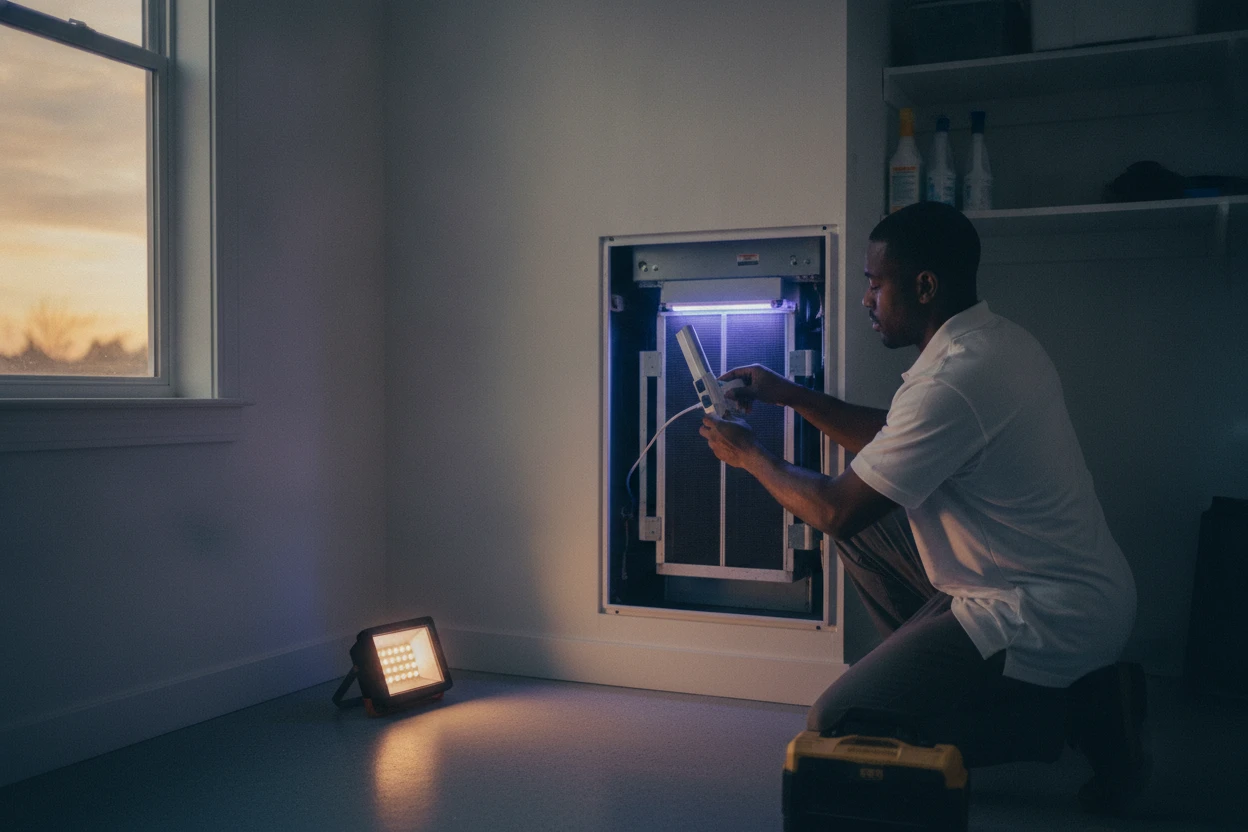
Yes, when installed correctly. The UV lamp is enclosed inside the ductwork or air handler, so no one is exposed to the light during normal operation. We install ozone-free UV-C systems and position them so they treat the air without any UV escaping into living space.
Is it safe to be in a room with a UV air purifier running?
For an HVAC-installed UV system, yes, because the light is sealed inside the ducting and never reaches you. For standalone room units, follow the manufacturer’s guidance, as some expose UV directly. We recommend enclosed, in-duct systems specifically so there is no direct exposure.
What are the side effects of UV air purifiers?
The two things to watch are direct UV exposure, which can harm eyes and skin, and ozone from certain UV lamp types, which is a lung irritant. Both are avoided by using enclosed, ozone-free UV-C installed inside the HVAC system, which is what we install. Done right, there are no meaningful side effects in your living space.
Which is better, UV or HEPA air purifier?
Neither is better, they do different jobs. HEPA or high-MERV filtration captures particles like dust, pollen, and wildfire smoke. UV inactivates living contaminants like mold and bacteria that filters do not kill. The strongest setup uses both: quality filtration for particles and UV for biological control.
How long does it take for UV light to kill mold?
Coil-mounted UV works continuously, so it suppresses and kills mold on the coil over ongoing exposure rather than instantly. Existing surface growth typically clears over days to weeks of steady operation, and because the light stays on, it prevents the mold from coming back.
Can UV air purifiers help with allergies, asthma, or COPD?
UV helps indirectly by reducing mold and biological growth in the system that can trigger symptoms, but the bigger win for allergies and respiratory conditions comes from MERV 13 filtration capturing pollen, dust, and dander. We usually recommend filtration and UV together for allergy, asthma, and COPD households.
Is it okay to sleep with an air purifier on all night?
Yes. An HVAC-installed UV system is designed to run continuously, including overnight, and a whole-home filter runs whenever the system does. Continuous operation is actually how UV does its job, keeping the coil and airstream clean right away.
What are the signs you need an air purifier?
Persistent musty odors, visible mold at the vents or on the coil, worsened allergies or asthma indoors, lingering cooking or pet smells, and a lot of dust are common signs. Depending on which, the answer may be UV, better filtration, ventilation, or a combination. We assess and recommend rather than sell one gadget.
Where is UV installed in the HVAC system?
Most commonly at the evaporator coil, where it keeps the wet coil and drain pan free of mold, and sometimes in the return duct to treat the moving air. We choose the placement based on your system and your goals, and size the lamp to the airflow.
How often do UV bulbs need to be replaced?
UV-C lamps lose effectiveness over time even though they still glow, so most are replaced about once a year. We check and replace the bulb during annual maintenance so the system keeps doing its job, and note the replacement date so you are not guessing.
 Review on Google · May 2026