Is HVAC and ductwork the same thing?
No. The HVAC equipment (furnace, AC, or heat pump) heats and cools the air; the ductwork is the network of channels that carries that conditioned air to each room and returns it. Even a perfect system underperforms if the ducts are leaky, crushed, or poorly designed, which is why the ducts matter as much as the box.
Do HVAC technicians do ductwork?
Yes. Ductwork is core HVAC work, and our technicians repair, seal, redesign, and replace ducts as well as service the equipment. Handling both together matters, because a new system on old leaky ducts never performs to its rating.
What are the signs you need new ductwork?
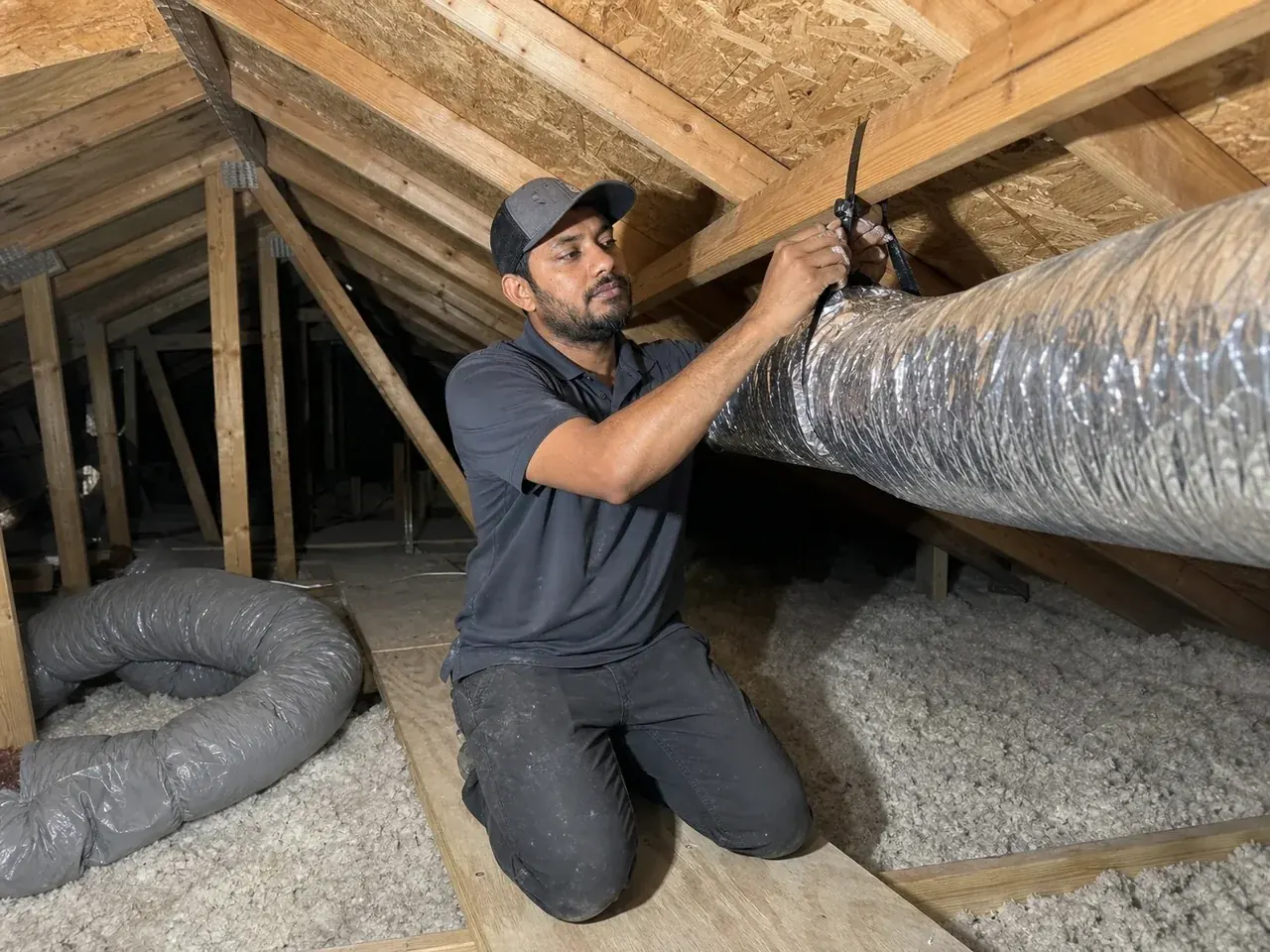
Common signs are uneven temperatures room to room, weak airflow, high energy bills, rooms that never get comfortable, excessive dust, and visible damage, disconnected sections, or sagging flex duct in the attic. If the ducts are past 15 to 20 years and leaking, repair may cost more than replacement.
What is the average cost to repair ductwork?
It depends on how much duct is affected and where it runs, so we price repairs and sealing per job after inspecting the system, and give you a written quote first. Sealing accessible leaks is usually a modest job; replacing long runs in a tight attic costs more. We tell you which makes sense for your situation.
How much should it cost to replace ductwork?
Full replacement is priced by the size of the home, the number of runs and registers, duct type, and access, so it varies widely. We quote it in writing after a look at your attic or crawlspace. Where only part of the system is failing, a targeted repair or reseal is often the smarter spend, and we will say so.
What are the 4 types of ductwork?
The common types are flexible duct (insulated flex, widely used in attics), rigid sheet-metal duct (durable, long-lasting), fiberglass duct board, and fabric or textile duct (mostly commercial). Most Sacramento homes use flex and sheet metal. We match the type to the run and your budget.
What is the life expectancy of ductwork?
Ductwork typically lasts 15 to 25 years, with flexible duct on the shorter end and rigid sheet metal longer. Age itself is less important than condition: tears, crushed sections, failed connections, and insulation breakdown are what trigger replacement.
Should ductwork be replaced after 20 years?
Not automatically. If 20-year-old ducts are intact and sealing well, they can keep going. But past 20 years many systems, especially flex duct, are leaking, sagging, or poorly insulated, and if you are replacing the HVAC anyway it is often the right time to replace the ducts too. We assess and give you the honest call.
Should you replace ductwork when replacing HVAC?
Often yes, if the ducts are old, leaky, or the wrong size for the new system. A high-efficiency system on undersized or leaky ducts cannot deliver its rated performance, so you would pay for efficiency you never receive. If the existing ducts are in good shape and correctly sized, we will tell you to keep them.
What is the 2 foot rule for ducts?
It is a duct-design guideline: keep at least about two feet of straight duct off the air handler before the first turn or fitting, so air leaves smoothly rather than becoming turbulent. Tight bends right at the unit choke airflow and efficiency, and it is one of the details we check on a redesign or install.
Does homeowners insurance cover air duct replacement?
Usually not for age, wear, or leaks, which are maintenance items. Insurance may apply when a covered event, such as a fire, flood, or pest damage under some policies, harms the ducts. Check your policy, and we can document the cause if you plan to file a claim.
Do mice get in ductwork?
They can, especially through gaps in older or leaky ducts, and droppings or nesting are a real air-quality concern and a legitimate reason to clean and seal. If we find evidence of pests, we recommend sealing the entry points and the ducts together so the problem does not return.
Does duct cleaning really make a difference?
It helps when there is visible mold, a pest infestation, or heavy debris, which are the causes the EPA points to. It is not a proven routine benefit, so for everyday dust, sealing leaks and upgrading filtration does more. See our air duct cleaning page for the honest breakdown.
How often should ductwork be cleaned?
There is no set schedule, the EPA advises cleaning only as needed for a real cause like mold, pests, or heavy debris. Sealing and keeping a good filter in place reduces how much ever gets into the ducts in the first place.
What are the signs of dirty air ducts?
Dust puffing from the registers, visible debris or mold at the vents, a musty smell, and quick-clogging filters are the signs worth acting on. Everyday dust alone usually is not a reason to clean, but it can be a reason to check for leaks pulling attic air into the system.

 Review on Google · June 2026