Do HVAC companies do energy audits?
Yes. Many, including us, offer an HVAC-focused energy audit that evaluates your heating and cooling equipment, ducts, insulation, airflow, and thermostat, then ranks improvements by payback. It’s more targeted than a whole-home auditor’s report, but centered on where most homes lose the most energy, the HVAC system and its distribution.
What is an HVAC energy audit?
An HVAC energy audit is a systematic assessment of how your home uses energy for heating and cooling, and where it’s wasted. We evaluate the equipment’s age and efficiency, duct tightness, insulation, air leakage, thermostat setup, and airflow, then give you a prioritized, written list of improvements ranked by payback. The goal is a clear plan to cut bills and improve comfort, not a sales pitch.
What happens during a home energy audit?
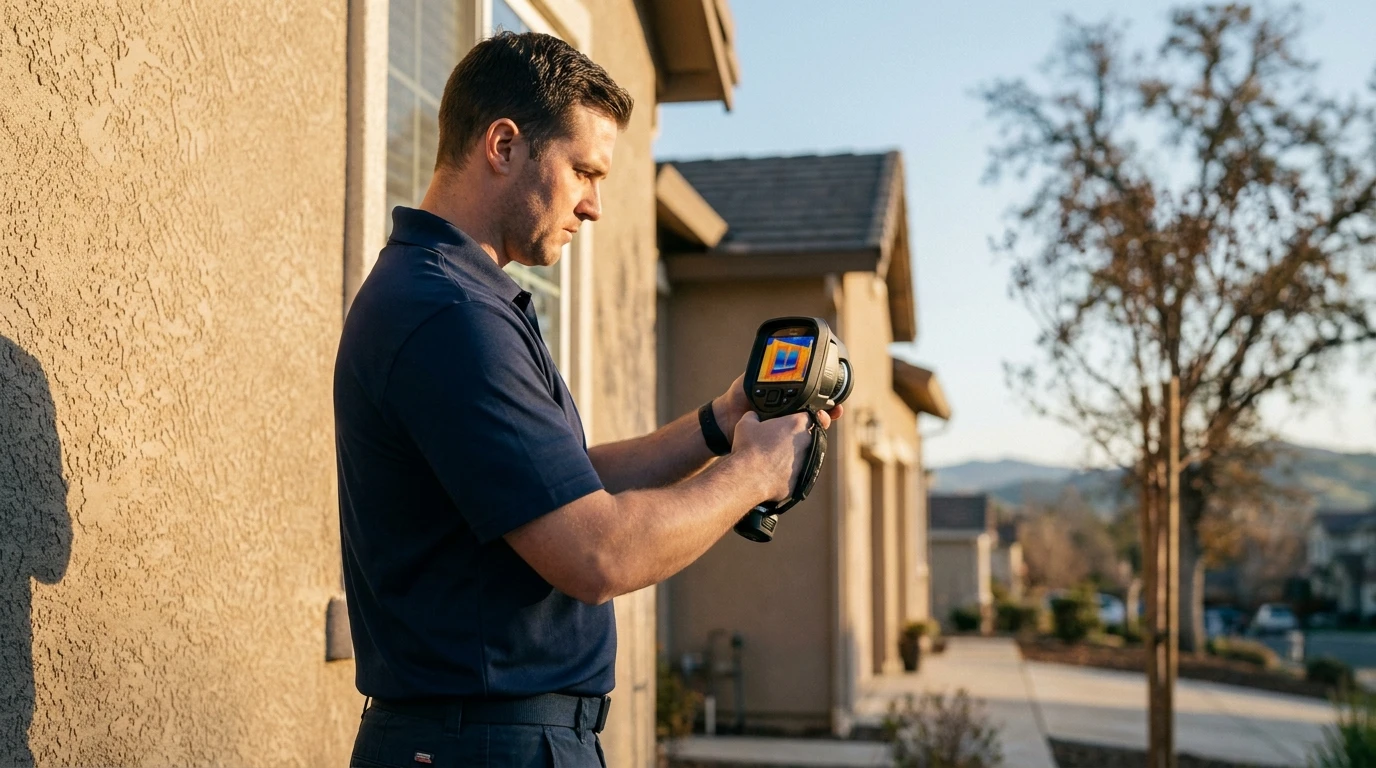
We inspect the heating and cooling equipment’s age and efficiency, check duct condition and leakage, review attic and envelope insulation and visible air leaks, look at thermostat settings, verify refrigerant charge and airflow, and note rooms that are too hot or cold. Everything ties back to a ranked, written improvement plan you can act on.
How much does a home energy audit cost?
An HVAC-focused audit is modestly priced and is often credited toward work you book, while a full third-party home energy audit costs more. Utilities sometimes offer subsidized or even free audits. We quote ours up front so there’s no surprise, and it usually pays for itself in the savings it uncovers.
How long does a home energy audit take?
A focused HVAC-centered audit of a typical home usually takes one to two hours, depending on size and access to the attic, ducts, and equipment. Larger homes and commercial buildings take longer. We walk the whole system rather than glancing at the furnace, so you get findings that actually explain your bills.
Can I do my own home energy audit?
You can do a useful basic walkthrough, checking for drafts, eyeballing insulation, feeling for uneven rooms, reviewing your bills, and using our scorecard above. That flags the obvious issues, but it can’t measure duct leakage, refrigerant charge, or airflow, which is exactly where a professional audit adds value and finds the hidden waste.
Is a home energy audit tax deductible?
The federal 25C credit that included a home energy audit expired at the end of 2025, so an audit is generally not federally deductible in 2026. Some utility and state programs still offer rebates or subsidized audits, however. We’ll point you to what may apply, and you confirm current eligibility with the program or your tax professional.
Is an energy audit worth the cost?
Usually yes, because the common findings, leaky ducts, thin insulation, low refrigerant charge, are significant and often cheaper to fix than people expect. The Department of Energy notes that sealing and insulating ducts alone can improve a system’s efficiency by up to about 20 percent. The audit pays for itself once you act on the prioritized plan.
What are the three things an energy audit will tell you?
In short: where your home is losing energy, how much each issue is costing you, and which fixes to do first based on payback. The problems, the price of ignoring them, and the plan. That’s the value of a good audit, a clear, ranked roadmap instead of guesswork.
What wastes the most electricity in a house?
Heating and cooling is the single largest energy use in a typical home, often around 45 to 50 percent of the bill, which is why HVAC efficiency, duct sealing, and insulation deliver the biggest savings. Water heating comes next, followed by appliances and lighting. An audit targets the HVAC waste first because that’s where the money is.
Does an energy audit improve home value?
Indirectly, yes. The upgrades an audit recommends, better insulation, sealed ducts, high-efficiency HVAC, a smart thermostat, lower operating costs and are attractive to buyers, and documented efficiency improvements can support a home’s value. The audit itself is the roadmap that tells you which of those upgrades are worth doing.
How to prepare for a home energy audit?
Gather a few recent energy bills, make sure the attic, ducts, furnace, and outdoor unit are accessible, and note any rooms that run too hot, too cold, or drafty along with any comfort or bill concerns. The more we can see and the more you tell us about how the home feels, the sharper and more useful the findings will be.

 Review on Google · April 2026